Bus Company Wordart Sublimation: A Practical Design Asset for Creative Execution
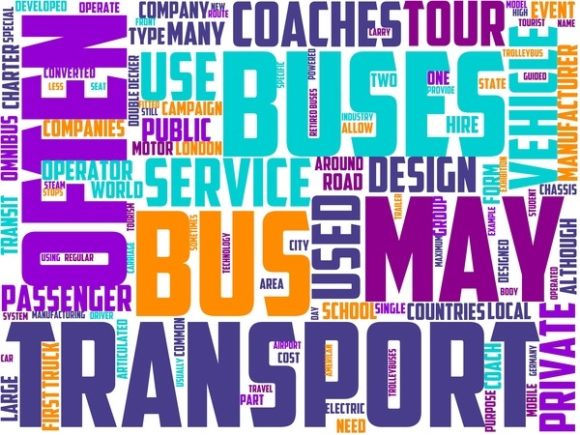
Bus Company Wordart Sublimation refers to a hand-drawn, colorful wordcloud design—crafted with intentional typography, balanced spacing, and layered visual rhythm—that’s optimized for sublimation printing. Unlike generic clipart or AI-generated word clouds, this asset is purpose-built: high-resolution, vector-friendly, and color-calibrated for heat-transfer applications on polyester fabrics, ceramic mugs, aluminum tumblers, coated notebooks, and other sublimation-ready substrates. It’s not just decoration—it’s a functional design component that supports clarity, brand alignment, and emotional resonance across physical and printed outputs.
Where It Fits in Your Creative Workflow
This wordcloud doesn’t exist in isolation. It enters your process at multiple inflection points—before ideation, during production, and even after launch—depending on your role and objective. For educators designing classroom posters, it serves as a visual anchor before lesson planning begins: the words “collaborate,” “explore,” “create,” and “reflect” aren’t decorative—they reinforce learning outcomes and guide layout decisions. For small business owners launching a new service line, Bus Company Wordart Sublimation becomes part of pre-launch asset prep: embedded into mockups for apparel samples, used in digital ads to preview merch aesthetics, or applied to packaging prototypes to test visual cohesion with existing branding.
During execution, it streamlines iteration. Because the design is layered—not flattened—you can selectively adjust hue saturation per word group, scale individual terms without distortion, or isolate phrases for use in secondary assets (e.g., pulling “innovate” and “connect” for a pair of matching business cards). That flexibility reduces back-and-forth with printers and avoids costly reprints when last-minute messaging adjustments arise.
Integration Across Tools and Platforms
Bus Company Wordart Sublimation works best when treated as a modular asset—not a standalone image. Its compatibility spans both design software and production systems. In Adobe Illustrator or Affinity Designer, it imports cleanly as an SVG or layered PSD, preserving editable text paths and color groups. In Canva, it functions reliably as a PNG with transparent background, though advanced recoloring requires exporting from vector-native tools first. For sublimation workflows using Sawgrass Virtuoso or Epson SureColor printers, the file’s CMYK profile and 300 DPI resolution ensure accurate color translation—especially important for the vibrant, hand-mixed palettes in the original design.
It also interfaces meaningfully with project management and collaboration tools. When shared via cloud folders (Google Drive, Dropbox), label the file clearly—e.g., BusCompany_Wordart_Sublimation_v2_CMYK—to signal version control and intended use. Include a brief README text file listing recommended substrates, minimum safe print sizes (e.g., 3" wide for fabric tags), and PMS equivalents for brand-color matching. This reduces miscommunication across teams—designers, marketers, and fulfillment staff all reference the same baseline.
Practical Implementation Tips for Real Projects
Start with substrate-first thinking. Not every surface handles fine-line detail equally. On textured canvas tote bags, reduce word density slightly and increase stroke weight by 0.5 pt to maintain legibility. For ceramic mugs, position the focal phrase (“journey,” “ride,” “move”) along the top third—where the eye lands first—and avoid placing small words near the handle seam, where heat pressure drops during sublimation.
When adapting for multi-purpose use, create three core variants early:
- Full wordcloud: For posters, large-format prints, and textile panels where context and atmosphere matter most.
- Phrase subset: Isolate 3–4 high-impact words (e.g., “drive,” “discover,” “together,” “forward”) for business cards, stickers, or social media banners.
- Monochrome outline version: A clean black-and-white line variant for embroidery digitizing, laser engraving on wood, or grayscale print runs—preserving the hand-drawn character without color constraints.
Test before scaling. Print one sample on your target material—even if it’s just a small swatch—before committing to bulk orders. Note how cyan shifts on white polyester vs. heather gray, or how yellow softens on ceramic. Keep those observations in a shared team doc; they inform future iterations and reduce waste.
Consistency, Quality Control, and Long-Term Use
Consistency isn’t about rigid repetition—it’s about recognizable intent. Using Bus Company Wordart Sublimation across different products signals intentionality: a notebook cover, a conference lanyard, and a workshop handout all share the same typographic voice and spatial logic. That builds subtle but durable brand recognition without relying on logos alone.
For quality control, build simple checkpoints into your review cycle:
- Verify color values match your brand guide (e.g., “adventure” uses #4A90E2, not a screen-sampled approximation).
- Confirm no word overlaps or kerning collisions at final output size—zoom to 400% in your layout app to inspect.
- Check bleed and safe zones: extend background elements 0.125" beyond trim lines, and keep primary words 0.25" inside.
Long-term, treat the file as a living asset. Archive the original vector source, but also save dated export versions (e.g., BusCompany_Sublimation_2024_Q3_PrintReady). As your brand evolves, you may adjust one or two words—not the whole structure—to reflect new priorities (“sustain” added, “fast” softened to “steady”). That kind of surgical update preserves equity while staying current.
Use Cases That Reflect Real Workflows
A freelance graphic designer used Bus Company Wordart Sublimation to unify a client’s rebrand rollout: the same base wordcloud appeared as embroidered chest logos on staff uniforms, as foil-stamped accents on presentation folders, and as animated text layers in a 30-second explainer video. Because the underlying structure was consistent, animation timing and motion paths translated directly across formats—cutting production time by nearly 40%.
An independent publisher integrated it into their editorial calendar: each quarterly theme (“curiosity,” “resilience,” “clarity”) anchored a set of downloadable printables—journal prompts, habit trackers, reading logs—all sharing the same typographic DNA. Readers began recognizing the visual language across formats, increasing repeat downloads and email sign-ups.
A community transit nonprofit applied it to volunteer training materials: the wordcloud appeared on orientation badges, slide decks, and laminated quick-reference guides. Staff reported faster onboarding—participants recalled key values not from bullet points, but from spatial memory of where “listen,” “support,” and “adapt” sat relative to each other.
Moving Beyond Decoration
Bus Company Wordart Sublimation succeeds because it bridges aesthetic and functional intent. It’s not filler. It’s a communication tool with built-in hierarchy, rhythm, and warmth—qualities that algorithmic word clouds often lack. When used deliberately—as part of preparation, not just embellishment—it supports decision-making, reinforces shared language, and reduces cognitive load for end users.
Whether you’re prototyping a product line, preparing a workshop series, or refreshing internal communications, start by asking: What do people need to feel or remember before they act? Then let the wordcloud serve that goal—not the other way around. Its value multiplies when it’s anchored in purpose, tested in context, and maintained with intention.