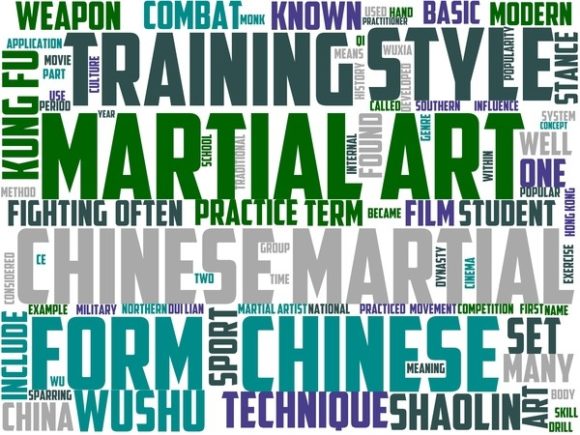
Chinese Martial Arts Wordart Book Cover
Imagine opening a book and feeling the quiet intensity of centuries-old discipline—not through dense text, but through a single, vibrant visual: a hand-drawn wordcloud where “Qi,” “Wu De,” “Tai Chi,” “Kung Fu,” “Balance,” and “Respect” swirl in harmonious color. That’s the essence of the Chinese Martial Arts Wordart Book Cover—a design tool rooted in tradition yet built for modern creativity.
This isn’t just decorative typography. It’s a carefully composed visual language—each word chosen for cultural weight, each curve drawn by hand to echo brushstroke rhythm, each hue selected to reflect yin-yang balance or the grounded energy of Shaolin earth tones. Because it’s hand-drawn and colorful—not algorithmically generated—it carries warmth, authenticity, and intentionality you can’t replicate with stock vectors or AI-generated patterns.
Why this wordcloud works where others fall short
Most martial arts-themed graphics lean heavily into clichés: red-and-black dragons, aggressive stances, or stylized fists. While dramatic, they often miss the philosophical depth and meditative grace central to real practice. The Chinese Martial Arts Wordart Book Cover avoids that trap. Its words are sourced from classical texts, modern pedagogy, and ethical codes taught in dojos worldwide—“Discipline,” “Patience,” “Flow,” “Stillness,” “Rooting,” “Intention.” These aren’t buzzwords. They’re lived principles.
That specificity makes it unusually versatile. A yoga studio owner uses it on workshop posters—not to sell combat skills, but to signal alignment with mindful movement. A mindfulness educator prints it on notebook covers for students tracking breathwork and reflection. A textile designer adapts its layout for silk scarf patterns, where “Harmony” curves like a river and “Center” anchors the composition. In each case, the design communicates meaning before a single sentence is read.
Real-world applications—beyond the obvious
For creators who make physical products, this wordcloud simplifies decisions without sacrificing nuance. Need a subtle motif for bamboo tea towels? Scale down the cluster and isolate “Calm” and “Clarity” in soft indigo and celadon. Designing a limited-edition zine on intergenerational teaching? Layer the full wordcloud behind a black-and-white portrait—letting “Lineage,” “Honor,” and “Practice” emerge softly in the background.
Marketers and small business owners find it especially useful for brand cohesion. Instead of commissioning custom illustrations for every product line (a time- and budget-intensive process), they use one consistent wordcloud as a flexible base—rotating emphasis based on context. On a podcast banner? Highlight “Listening,” “Awareness,” and “Growth.” On a retreat brochure? Bring forward “Stillness,” “Return,” and “Beginner’s Mind.” The visual stays unified; the message adapts.
Even educators benefit. One high school PE instructor uses a simplified version on classroom posters—replacing complex terminology with accessible phrases like “Breathe First,” “Move With Purpose,” and “Respect Space.” Students connect faster because the language mirrors what they hear on the mat—and the hand-drawn quality feels human, not institutional.
Who gains the most—and why
Freelance designers and print-on-demand sellers appreciate how easily this wordcloud integrates across formats. Its vector-ready hand-drawn lines hold crisp detail at any size—from 0.5-inch enamel pin text to 48-inch wall decals. Unlike raster images, it scales cleanly for embroidery files, heat-transfer vinyl, or screen-print separations.
Authors and publishers of wellness, philosophy, or movement-based books use it as a cover foundation—especially for titles that bridge Eastern practice and Western application (“Mindful Leadership Through Wu Wei” or “The Still Point: A Kung Fu Guide to Focus”). It signals depth without requiring readers to decode symbolism first.
Hobbyists and crafters value its adaptability in mixed-media work. Try tracing key words onto wood slices with white acrylic pen, then staining the grain around them. Or stitch “Center” in black thread over raw linen, letting the surrounding words remain implied in negative space. Because it’s hand-drawn—not rigidly geometric—it invites interpretation, not replication.
A note on thoughtful use
This wordcloud thrives when treated as a starting point—not a finished solution. It doesn’t replace cultural consultation if your project involves sacred terms or lineage-specific concepts (e.g., Daoist cosmology or temple-specific mantras). For public-facing materials—especially those targeting East Asian audiences—consider pairing it with input from practitioners or scholars. Respect grows from accuracy, not aesthetics alone.
It also assumes a certain design literacy. If you’re new to layout, avoid overcrowding the wordcloud with additional graphics. Let it breathe. Use generous margins, neutral backgrounds (unbleached cotton, matte kraft paper, soft grey), or monochrome accents to keep focus on the words themselves. Over-designing undermines its quiet power.
Where to begin—practical next steps
Start small. Print a single 5×7 version on textured paper and tape it beside your desk. Notice which words resonate most on different days—“Resilience” during a tough week, “Flow” before a creative session. That personal connection is your best guide for broader use.
When adapting for apparel, test contrast first: deep navy fabric pairs beautifully with ochre and charcoal words; light heather grey needs bolder ink tones like burnt sienna or forest green. For digital use—like eBook covers or social banners—convert the file to PNG with transparent background, then adjust opacity (60–75%) behind title text so words support rather than compete.
And remember: this isn’t about filling space. It’s about inviting attention—to ideas, to practice, to presence. Whether stitched onto a meditation cushion, silkscreened on a tote bag for a community workshop, or embedded in the footer of a teacher’s newsletter, the Chinese Martial Arts Wordart Book Cover works because it honors both craft and contemplation. It asks nothing of the viewer except a moment’s pause—and offers, in return, a quiet reminder of what endures.
- Use it to unify visual identity across physical + digital touchpoints
- Adapt word emphasis—not just color—to match audience intent
- Pair with tactile materials (linen, cork, handmade paper) to deepen resonance
- When in doubt, simplify: one word, one color, one surface often speaks loudest
- Always credit source inspiration if sharing publicly—especially when referencing classical terms