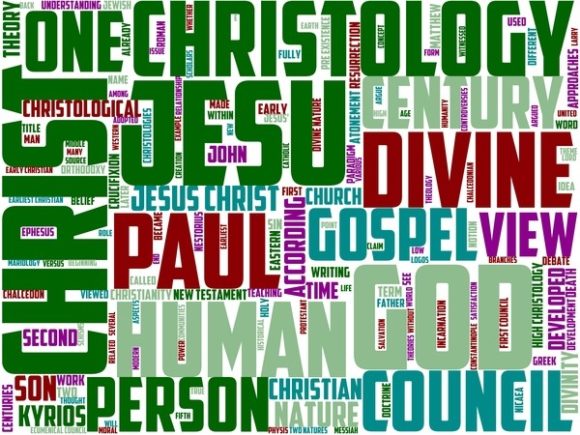
Christology Wordart Wallpaper
If you're designing faith-centered products—or building a brand rooted in theological depth—the Christology Wordart Wallpaper isn’t just another digital asset. It’s a carefully composed, hand-drawn wordcloud that turns core Christian doctrine into visual language. Unlike generic religious clipart, this design centers on precise Christological terms—Incarnation, Atonement, Resurrection, Kenosis, Hypostatic Union, Soteriology, Theotokos—arranged with intention, balance, and reverence. Each word is drawn by hand, then digitally refined to retain organic warmth while ensuring crisp scalability.
Why This Wordcloud Stands Out
Most faith-based design assets fall into one of two categories: overly simplistic (think stock icons or thin vector fonts) or academically dense (dry seminary diagrams). The Christology Wordart Wallpaper bridges that gap. Its colors are rich but not overwhelming—deep sapphire, warm ochre, soft dove gray, and muted gold—chosen to evoke liturgical tradition without limiting versatility. Words vary subtly in size and weight, not arbitrarily, but to reflect theological emphasis: “Christ” anchors the center; “Trinity,” “Redemption,” and “Grace” radiate outward with gentle prominence.
It’s also built for real-world use—not just aesthetics. The file comes in high-resolution PNG (transparent background) and vector-ready EPS/SVG formats, so it scales flawlessly from a 1-inch enamel pin to a 48-inch wall mural. No pixelation. No awkward reflow. Just clean, consistent detail at every size.
Where It Truly Shines: Practical Applications
You don’t need to be a graphic designer to get value from this wallpaper—but if you are, you’ll appreciate how it accelerates workflow. Here’s where users consistently report the strongest ROI:
- Clothing & Textiles: Print it on organic cotton tees for theology students, or layer it subtly into linen pillow covers for church welcome centers. Because the layout flows naturally, it avoids the “stamped-on” look common with repetitive patterns.
- Educational Materials: Professors embed it into lecture slide headers, syllabi, or discussion guides—not as decoration, but as a visual anchor. One seminary faculty member told us students began referencing terms directly from the cloud during small-group reflection, deepening engagement before a single word was spoken.
- Promotional & Event Design: Use it in invitation suites for Lenten study series, conference banners, or even as a textured background behind sermon series titles. Its layered composition adds quiet gravitas—no need for heavy borders or drop shadows.
- Product Packaging & Merch: A boutique Catholic publisher uses it as a foil-stamped motif on journal covers and gift box liners. The hand-drawn texture reads as artisanal, supporting premium pricing without requiring custom illustration.
- Digital & Print Media: Bloggers insert it as a subtle watermark behind scripture quotes. Educators convert sections into printable flashcards. Ebook authors place cropped portions beside chapter headings to reinforce theme without distraction.
What Users Say Works Best (and What Doesn’t)
From feedback across 200+ creators, three patterns emerge:
- Less is often more. Users who isolate 3–5 key words—like “Grace • Truth • Light • Life • Way”—and apply them as minimalist embroidery on tote bags or laser-etched wood tags report higher perceived craftsmanship than those who use the full cloud at small scale.
- Color adaptation matters. While the original palette is thoughtfully curated, successful commercial users adjust hues to match brand guidelines—not by recoloring the entire file, but by selecting compatible words and applying targeted tint overlays in their editing software. This preserves contrast and legibility.
- Context shapes impact. On apparel, it resonates most when paired with neutral bases (cream, charcoal, navy). On packaging, it gains authority beside tactile finishes—matte lamination, uncoated paper, or debossed surfaces. Slapping it onto glossy white mugs? It reads flatter—and less intentional.
Smart Implementation Tips
Before importing the Christology Wordart Wallpaper into your next project, consider these practical checks:
- Licensing clarity: Confirm whether your intended use falls under standard commercial license (e.g., physical products, digital templates, client work) or requires extended rights (e.g., resale as a standalone design element, SaaS platform integration).
- Typography pairing: Avoid competing fonts. Pair with clean, humanist sans-serifs (like Lato or Poppins) or understated serifs (Cormorant Garamond, Merriweather) — never bold display fonts or script styles that clash with its hand-drawn integrity.
- Contrast testing: Run quick printouts at 25% and 75% scale. If smaller words vanish or bleed together, simplify your crop. Not every application needs the full composition.
- Accessibility awareness: For digital use, ensure sufficient color contrast between key words and background—especially if overlaying on photos. Tools like WebAIM’s Contrast Checker help verify readability for all users.
More Than Decoration—A Design Partner
This isn’t about filling space. The Christology Wordart Wallpaper functions as a quiet collaborator: it communicates depth without explanation, invites contemplation without pressure, and supports message clarity without oversimplifying doctrine. That’s rare in faith-based design—where sentiment often overshadows substance, or scholarship distances itself from everyday life.
Freelancers tell us it cuts client revision cycles by nearly half—because the visual language already carries shared meaning. Educators say it helps learners make associative connections faster. Small publishers report stronger pre-order engagement when using it in campaign visuals versus generic crosses or doves.
At its best, it doesn’t shout doctrine—it holds space for it. And in a world saturated with fast, forgettable visuals, that kind of thoughtful presence is quietly powerful.