Cirebon Wordart Background: A Vibrant Design Resource for Creative Expression
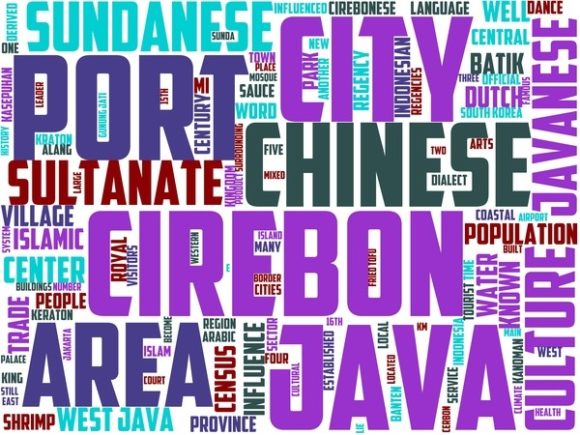
The Cirebon Wordart Background represents a distinctive fusion of cultural nuance and contemporary design sensibility. Originating from the rich visual language associated with Cirebon—a historic port city on Java’s north coast known for its batik, mask traditions, and layered artistic heritage—this hand-drawn wordcloud transcends typical typographic decoration. It is not merely a collection of words arranged decoratively; it is a carefully composed, colorful, organic composition that invites interaction, interpretation, and adaptation across physical and digital media.
What Makes This Wordcloud Structurally Unique?
Unlike algorithmically generated word clouds that prioritize frequency or size hierarchy, the Cirebon Wordart Background is crafted manually—each word drawn, spaced, and angled with intention. Its layout avoids rigid grids or radial symmetry, instead embracing asymmetry, overlapping layers, and varied stroke weights. Words flow like brushstrokes: some bold and grounded, others delicate and floating. The color palette leans into warm earth tones—terracotta, indigo, saffron, and forest green—balanced with unexpected accents of coral or cobalt, echoing traditional Cirebonese textile dyes while remaining fully compatible with modern branding palettes.
This intentional imperfection is central to its appeal. The slight irregularity in letterforms, the subtle texture implied in each stroke, and the gentle variation in sizing create visual warmth and authenticity—qualities increasingly valued in an era saturated with sterile vector perfection. Because it’s hand-drawn, no two placements feel identical, even when repeated across a surface—making it ideal for textile repeats, wallpaper patterns, or background fills where predictability can dull impact.
Practical Applications Across Industries and Mediums
The versatility of the Cirebon Wordart Background lies not in its aesthetic alone, but in how naturally it integrates into diverse production workflows. Its resolution-independent nature (when delivered as scalable vector or high-DPI raster) ensures fidelity whether printed at 2 inches on a jewelry tag or stretched across a 6-foot event banner.
Apparel & Textile Design
Designers use this wordcloud as a subtle all-over print for cotton scarves, linen tote bags, or chambray jackets—where the words become texture rather than literal message. Because the composition avoids heavy contrast or sharp edges, it prints cleanly on reactive-dye fabrics and holds up through multiple washes without cracking or bleeding. One apparel brand in Bandung repurposed the background as a lining motif inside denim jackets, revealing fragments of “resilience,” “curiosity,” and “craft” only upon sleeve roll or pocket peek—an elegant nod to layered meaning.
Stationery & Print Communication
In stationery, the Cirebon Wordart Background functions both as a full-page backdrop and as a cropped accent. On business cards, a narrow band along the bottom edge grounds contact details with quiet vibrancy. For invitation suites, designers isolate individual words—“celebrate,” “together,” “begin”—and integrate them into calligraphy headers or foil-stamped borders. Its readability at small scale makes it effective in notebook covers, journal endpapers, and even QR code surrounds, where adjacent text enhances scannability without competing visually.
Educational & Institutional Use
Teachers and curriculum developers apply sections of the wordcloud to classroom posters illustrating thematic vocabulary—e.g., highlighting “inquiry,” “observe,” “reflect,” and “connect” within a science unit on ecosystems. Unlike clip-art style illustrations, the hand-drawn quality signals approachability and human-centered learning. Universities in Yogyakarta have embedded localized versions—replacing generic English terms with bilingual phrases (“berpikir kritis / critical thinking”)—into orientation materials, reinforcing inclusive pedagogy through visual language.
Product Packaging & Retail Environments
Small-batch producers—from ceramic studios to organic tea brands—leverage the background to unify packaging systems. A single wordcloud file serves as base art for sticker seals, box wraps, label backdrops, and shelf talkers. Its non-directional flow allows seamless wraparound on cylindrical tins or hexagonal soap boxes. Importantly, because the composition contains no trademarked phrases or culturally inappropriate terminology, it clears legal review faster than custom copy-driven assets—reducing time-to-market for seasonal collections.
Why Designers Choose Hand-Drawn Over Digital Alternatives
Three functional advantages distinguish the Cirebon Wordart Background from generative tools:
- Contextual Flexibility: Algorithmic clouds often force emphasis onto high-frequency terms—even if those words lack emotional resonance. Here, every term was selected for semantic weight and rhythmic fit—not search volume. Phrases like “pause,” “wonder,” and “stillness” appear with equal prominence to “create” or “launch,” supporting mindful branding strategies.
- Production Efficiency: While hand-drawing implies labor, the final asset eliminates iterative client revisions common with AI-generated variants. Stakeholders respond more consistently to tangible, human-made rhythm than to statistically optimized layouts that feel emotionally neutral—or worse, algorithmically alien.
- Cultural Resonance Without Appropriation: Rather than borrowing motifs superficially, the design honors Cirebon’s legacy of narrative textiles—where pattern carries story—without replicating sacred symbols. It operates as a respectful abstraction, inviting global audiences to engage with Indonesian design philosophy through accessible form.
Implementation Considerations for Creators
Successful integration hinges on thoughtful adaptation—not direct replication. Designers report strongest outcomes when they treat the Cirebon Wordart Background as a foundational layer rather than a finished piece. Common refinements include:
- Color Customization: Swapping the base palette to align with brand guidelines—e.g., shifting indigo to navy for corporate reports, or desaturating tones for minimalist home décor lines—preserves structural integrity while expanding usability.
- Selective Masking: Using clipping masks to reveal only portions over photography or gradients maintains legibility while adding depth. A wellness brand applied a soft Gaussian blur to the background, then masked “breathe” and “ground” over a misty mountain photo—creating focal anchors without visual noise.
- Typography Pairing: When overlaying body text, designers recommend sans-serif fonts with open counters (e.g., Inter, Poppins) set at 14–16pt minimum. Avoiding serifs or condensed styles prevents visual competition with the hand-drawn strokes.
- Scale Awareness: At very large formats (billboards, trade show walls), minor elements may dissolve. Test prints at 25% scale first—then simplify by removing low-contrast inner words or increasing stroke weight on key terms before final output.
Emerging Trends Supporting Its Relevance
Three macro-trends reinforce the growing utility of resources like the Cirebon Wordart Background:
First, the rise of slow design—a movement prioritizing intentionality, material honesty, and human-scale craftsmanship—positions hand-drawn assets as ethical alternatives to mass-produced digital kits. Second, the expansion of multilingual branding benefits from non-linguistically dominant layouts: since words are arranged visually rather than syntactically, translations integrate seamlessly without disrupting composition. Third, adaptive reuse in sustainability-driven production favors modular, multi-context assets—reducing the need for dozens of bespoke files per campaign.
Notably, educators in Singapore and Jakarta have begun using editable versions of the background in design thinking workshops, inviting students to replace words with locally relevant values—“gotong royong,” “musyawarah,” “keseimbangan”—demonstrating how a single creative scaffold can support culturally grounded ideation across geographies.
Accessibility and Inclusive Design Integration
While inherently visual, the Cirebon Wordart Background supports inclusive practices when implemented with care. For digital use, pairing it with sufficient contrast ratios (minimum 4.5:1 against adjacent text) and providing alternative text descriptions (“hand-drawn multicolor wordcloud featuring terms related to creativity and well-being”) meets WCAG 2.1 standards. In print, embossing key words or pairing with braille labels extends tactile engagement—something several inclusive fashion labels in Surabaya now implement for garment care tags.
Importantly, the background avoids reliance on color alone to convey meaning. Its strength lies in shape, spacing, and rhythm—making it perceivable across varying visual abilities. Design teams at Universitas Indonesia’s Inclusive Design Lab confirmed that users with color vision deficiency identified core themes just as readily through spatial grouping and stroke variation as through hue.
Looking Ahead: Beyond Decoration Toward Dialogue
The most compelling evolution of the Cirebon Wordart Background isn’t in broader adoption—but in deeper participation. Some collectives now invite contributors to submit original words reflecting personal definitions of “belonging” or “growth,” then weave new iterations into community-led murals or co-designed fabric rolls. This transforms the background from static asset to living archive: a visual conversation across generations and disciplines.
For creators weighing options in a crowded marketplace, the value isn’t found in novelty alone—but in how thoughtfully a tool bridges intention and execution. The Cirebon Wordart Background succeeds because it asks nothing of the user except attention—and returns, in exchange, permission to make space for meaning, one hand-drawn word at a time.