Cooperstown Wordart Background: A Hand-Drawn Word Cloud for Thoughtful Design Work
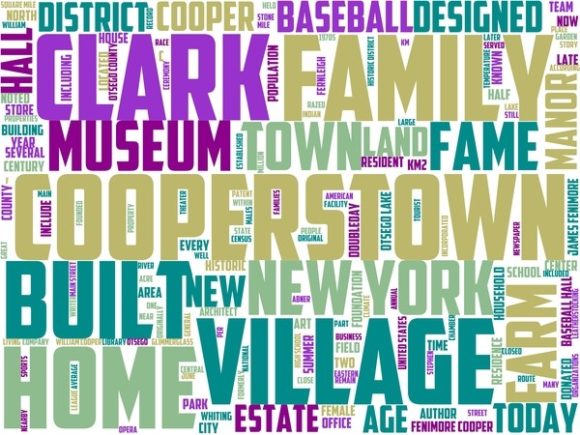
The Cooperstown Wordart Background is a hand-drawn, colorful word cloud built around themes of inspiration, creativity, and personal expression. Unlike algorithmically generated word clouds or vector-based typographic layouts, it’s crafted with visible brushwork, organic line variation, and intentional color layering—giving it texture, warmth, and visual authenticity. It’s delivered as a high-resolution PNG with transparent background, optimized for both digital use and print reproduction at common craft and product sizes.
What Sets This Wordart Apart From Other Word Cloud Options
Most word clouds today fall into two broad categories: computational and illustrative. Computational word clouds (like those from online generators) prioritize frequency-weighted layout logic—larger words appear more often in source text, but they often lack aesthetic cohesion or stylistic intention. Illustrative word clouds, by contrast, are drawn or arranged manually—but many still rely on digital typefaces, rigid grids, or flat color fills.
The Cooperstown Wordart Background belongs firmly to the latter group, yet distinguishes itself through its tactile sensibility. Each word is shaped with slight irregularity—letters taper, curves wobble just enough, spacing breathes rather than compresses. Colors shift subtly across gradients or abut in deliberate juxtapositions (e.g., mustard beside slate blue, coral against olive green), avoiding neon saturation or overused pastel palettes. This isn’t “designed to trend”—it’s designed to endure in physical objects where repetition and context matter.
Where It Fits—and Where It Doesn’t—in Real-World Projects
This background excels where human-scale detail and expressive nuance enhance perception: apparel prints (especially on natural fibers like cotton or linen), notebook covers, ceramic mug decals, woven textile swatches, and greeting cards meant for display or gifting. Its hand-drawn quality reads clearly at 3–6 inches wide—a sweet spot for pillow inserts, sticker sheets, or small-batch packaging labels.
It’s less suited for applications requiring strict scalability without loss of fidelity (e.g., large-format banners above 48 inches), ultra-minimalist branding systems that demand typographic uniformity, or contexts where legibility under time pressure matters most—like safety signage or mobile UI overlays. Because it’s not built from editable vectors or layered fonts, customizing individual words or rearranging layout requires raster editing skill—not drag-and-drop simplicity.
Practical Use Cases With Realistic Expectations
- Clothing & Accessories: Works well as an all-over print on tote bags or t-shirts when scaled appropriately (e.g., repeated at 50–70% opacity for subtlety). Avoid full-front chest placement if fine details need to survive screen printing halftones.
- Home Décor & Stationery: Translates cleanly to laser-cut wood signs, embroidered hoop art, or foil-stamped journal covers. The color balance holds up under matte lamination and soft-touch coatings.
- Promotional Materials: Effective on invitation suites where tone matters more than information density—think wedding programs, workshop handouts, or boutique retail tags. Less effective for dense informational flyers where hierarchy must be instantly parsed.
- Digital Products: Serves reliably as a background layer in Canva templates, eBook chapter dividers, or printable habit trackers—provided users understand transparency won’t render in all PDF viewers without flattening.
Comparing Approaches: When to Choose Hand-Drawn Over Algorithmic or Type-Based Alternatives
If your goal is to visualize textual data—say, survey responses or keyword analysis—the Cooperstown Wordart Background isn’t the tool. It doesn’t encode frequency, weight, or relational logic. For that, tools offering exportable SVGs with customizable weighting, font pairing, and interactive filtering remain more appropriate.
But if your aim is emotional resonance—inviting curiosity, signaling craftsmanship, or reinforcing brand values like authenticity or approachability—hand-drawn word art offers something algorithmic outputs rarely achieve. Compare it to a serif typeface versus a handwritten script: neither is “better,” but each communicates different qualities before a single word is read.
Similarly, while some designers reach for freehand lettering kits or Procreate brushes to build custom clouds from scratch, the Cooperstown Wordart Background saves time without sacrificing uniqueness. It avoids the “template fatigue” of endlessly reused Illustrator patterns or Canva elements—yet doesn’t require illustration expertise to deploy meaningfully.
Limitations Worth Acknowledging Upfront
First, customization is bounded. You can recolor the entire image non-destructively in Photoshop or Affinity Photo using adjustment layers—but swapping out “creativity” for “resilience” means redrawing, not editing. Second, cultural or linguistic flexibility is limited: the current version uses English vocabulary selected for broad aspirational relevance (e.g., “grow,” “believe,” “explore”). It doesn’t support right-to-left scripts or diacritical marks natively.
Third, licensing terms matter. While usable across many commercial products—including resale items like printed notebooks or embroidered patches—it’s not cleared for use in logos intended for trademark registration, nor for mass-produced merchandise where the word cloud becomes the sole identifying mark (e.g., a clothing line named after one of the embedded words).
Decision Factors to Guide Your Choice
Ask yourself these questions before selecting the Cooperstown Wordart Background—or deciding it’s not the right fit:
- Is texture more important than precision? If you value visible handwork over pixel-perfect alignment, this aligns well.
- Do your end products favor warmth over neutrality? It leans into cozy, grounded, and human—not sleek, corporate, or futuristic.
- How much control do you need over individual elements? If rearranging words or changing font weights mid-project is routine, consider layered vector alternatives instead.
- What’s your production pipeline? If you’re printing via DTG, sublimation, or embroidery digitizing, test a small run first—the watercolor-like edges hold up differently across methods.
- Who is seeing this—and for how long? It performs best when viewed closely and repeatedly (a desk calendar, a child’s bedroom poster) rather than glanced at from across a room (trade show backdrop, bus shelter ad).
Alternatives to Keep in Mind
For projects needing editable text, consistent scaling, or multilingual support, explore hand-lettered vector word clouds created in Illustrator with live text layers—or commission custom lettering from a designer who delivers layered, scalable files. For data-driven visualization, revisit dedicated word cloud generators that output clean SVGs with semantic labeling and accessibility attributes.
If budget or timeline constraints rule out custom work, look for hand-drawn assets tagged as “commercial use” with clear license summaries—not just “free for personal use.” Check file formats: TIFF or PSD files may offer more editing flexibility than flattened PNGs, though they’re larger and less universally supported.
In short, the Cooperstown Wordart Background occupies a thoughtful middle ground: more intentional than automated tools, more accessible than bespoke illustration, and more distinctive than generic design assets. It’s not a universal solution—but for makers, educators, small studios, and independent creators prioritizing character over convenience, it’s a quietly capable resource worth evaluating alongside other options.