Changzhi Wordart Tumbler: A Versatile Hand-Drawn Wordcloud for Authentic Visual Storytelling
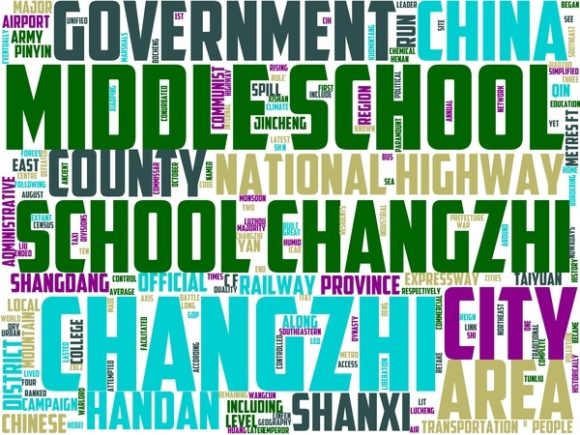
The Changzhi Wordart Tumbler isn’t just another digital asset—it’s a thoughtfully composed, hand-drawn wordcloud that bridges artistic expression with functional design. Unlike algorithmically generated word clouds that prioritize frequency over feeling, this collection emphasizes organic line work, intentional color harmony, and typographic warmth. Each element is crafted to resonate emotionally while remaining highly adaptable across physical and digital mediums. Its strength lies not in complexity, but in clarity: a balanced composition of meaningful words—like “creativity,” “joy,” “growth,” “balance,” “inspire,” and “together”—arranged with visual rhythm rather than rigid hierarchy.
Why Hand-Drawn Wordclouds Stand Out in a Digital-First World
In an era saturated with AI-generated graphics and templated layouts, the human touch carries quiet authority. The Changzhi Wordart Tumbler reflects deliberate craftsmanship: subtle variations in stroke weight, slight irregularities in letterforms, and nuanced color gradients that mimic watercolor washes or soft marker blends. These qualities aren’t decorative flourishes—they’re cognitive anchors. Research in visual cognition shows that viewers retain information longer when typography feels tactile and intentional, especially in educational or motivational contexts. A student glancing at a classroom poster featuring this wordcloud is more likely to pause and absorb its message than one scanning a sterile, high-contrast sans-serif list.
This authenticity translates directly into trust. For educators designing lesson materials, therapists creating wellness worksheets, or nonprofit teams developing community outreach banners, the hand-drawn aesthetic signals care—not just in content, but in presentation. It avoids the subconscious fatigue associated with over-polished, corporate-grade vectors. Instead, it invites interaction: a teacher might trace a word with a finger during circle time; a child might color in a section of the cloud as part of a reflection exercise; a small business owner might print it onto fabric for a limited-run tote bag that feels personal, not promotional.
Adaptability Across Mediums: From Surface to Substance
One of the most practical strengths of the Changzhi Wordart Tumbler is its medium-agnostic design. It was created with scalability and reproduction integrity in mind—no fine lines disappear at small sizes, no colors bleed unpredictably in print, and no elements rely on screen-specific effects like drop shadows or CSS animations.
- Clothing & Textiles: Because the outlines are clean and the spacing generous, the wordcloud transfers beautifully onto cotton tees, linen pillowcases, or denim jackets via screen printing, heat transfer, or embroidery. Designers report minimal adjustment needed when converting the vector file for stitch-count optimization in machine embroidery software.
- Packaging & Print Collateral: On kraft paper gift tags or soy-ink printed brochures, the warm palette (think terracotta, sage, ochre, and indigo) remains legible without high contrast—and avoids the harshness of CMYK black-on-white overload. It works equally well reversed out of dark stock or layered under semi-transparent overlays in magazine layouts.
- Digital & Interactive Use: While rooted in analog sensibility, the source files are fully editable vector formats (SVG, EPS, AI). That means designers can isolate individual words to animate transitions on websites, adjust hue shifts for brand-aligned email headers, or reposition clusters for responsive banner ads without pixelation or quality loss.
- Educational Tools: Teachers use scaled-down versions in interactive PDFs—students click on words to reveal definitions, journal prompts, or related images. In physical classrooms, laminated cards cut from the wordcloud serve as discussion starters during social-emotional learning circles or vocabulary-building rotations.
Real-World Implementation: How Different Users Leverage Its Flexibility
The value of the Changzhi Wordart Tumbler reveals itself not in theory, but in daily practice. Below are observed applications across diverse fields—each grounded in actual usage patterns, not hypothetical suggestions.
Hobbyists & Makers
Many crafters treat the wordcloud as a foundational layer—not a finished piece. One textile artist layers it beneath hand-stitched motifs on quilt blocks, using the words as subtle guides for thread placement. Another scrapbooker prints it onto vellum, then collages pressed botanicals over select terms (“bloom,” “root,” “wild”) to create thematic spreads. The key insight here is permission: because the design feels open-ended rather than prescriptive, users instinctively reinterpret rather than replicate.
Small Business Owners
A local yoga studio uses a modified version—swapping “serenity” for “stillness” and “strength” for “steadiness”—on welcome mats, class schedule boards, and client intake forms. They found that clients consistently reference the wall-mounted poster during private sessions, using the words as breathing anchors. Similarly, a ceramicist incorporates fragments of the wordcloud into her glaze-transfer decals, embedding phrases like “hold gently” or “shape with care” into mugs and bowls—turning functional objects into quiet reminders.
Educators & Curriculum Designers
In inclusive classrooms, the Changzhi Wordart Tumbler supports multimodal learning. A special education team uses the base layout as a customizable template: students choose three words that reflect their weekly goals, then draw symbols beside them. The same layout appears in a simplified monochrome version for low-vision learners, where spacing and weight differences replace color cues. Its versatility across ability profiles underscores thoughtful design—not just visual appeal.
Design Considerations for Ethical & Effective Use
Even beautiful tools require mindful application. When integrating the Changzhi Wordart Tumbler—or any word-based visual—into your work, consider these evidence-informed principles:
- Contextual Relevance Over Decoration: Avoid placing the wordcloud where it competes with primary information. On a conference program, it functions best as a thematic divider between agenda sections—not as a background behind dense text. Its purpose is resonance, not redundancy.
- Accessibility by Default: While the hand-drawn style is charming, ensure sufficient contrast between text and background (minimum 4.5:1 for normal text) when used digitally. Many users modify the original palette slightly—darkening blues against cream, lightening yellows on navy—to meet WCAG 2.1 standards without sacrificing warmth.
- Linguistic Integrity: The original set uses English words selected for broad emotional resonance. If adapting for multilingual audiences, avoid direct translation of idioms (“find your spark” → “encuentra tu chispa” works; “ride the wave” does not). Instead, collaborate with native speakers to identify culturally grounded equivalents that preserve intent over literal meaning.
- Scale With Intention: At very large sizes (e.g., 8’ x 4’ murals), some hand-drawn details may blur. Test print at 10% scale first to confirm legibility of smaller terms. Conversely, at tiny scales (e.g., 1” square stickers), prioritize cluster density over individual word clarity—let the overall shape communicate before the specifics.
Integration Into Creative Workflows
How does the Changzhi Wordart Tumbler fit into existing design pipelines? It rarely sits alone—it’s a connective tissue. Graphic designers embed it into Adobe Illustrator artboards alongside custom icons and photography. Educators import it into Canva templates, then overlay editable text boxes for localized adaptations. Researchers building participatory action projects use it as a co-creation scaffold: participants annotate printed copies with sticky notes, adding new words or crossing out ones that no longer apply—transforming a static image into a living document.
What makes this possible is its structural honesty. There are no hidden layers, no locked assets, no proprietary fonts required to maintain fidelity. Every word is a separate, editable path. Every color is a named swatch, easily swapped in brand-guideline documents. This transparency lowers barriers—not just technically, but psychologically. A first-time user isn’t intimidated by nested groups or obscure plugins. They see words, shapes, and space—and immediately grasp how to make it theirs.
Looking Beyond Aesthetics: The Role of Language in Visual Culture
At its core, the Changzhi Wordart Tumbler participates in a deeper cultural shift: the recentering of language as material. We no longer treat words as mere labels or metadata—we shape them, texture them, arrange them spatially to evoke tone, memory, and intention. This mirrors trends in typography-driven branding, literary muralism, and even data visualization where narrative replaces raw metrics.
But unlike trend-driven assets that fade with the season, this wordcloud endures because it resists novelty for its own sake. Its colors don’t follow Pantone’s annual forecast; they echo natural pigments—iron oxide reds, lapis lazuli blues, charcoal greys. Its words aren’t viral buzzwords but enduring human concepts. That longevity is what allows a single purchase to support projects spanning years: a researcher’s fieldwork journal cover, a therapist’s office wall, a student’s graduation card, a startup’s investor pitch deck—all anchored by the same quiet, confident composition.
Ultimately, the Changzhi Wordart Tumbler succeeds not by doing everything, but by doing one thing exceptionally well: giving language visible weight. It doesn’t shout. It doesn’t distract. It waits—inviting attention, encouraging interpretation, and honoring the slow, thoughtful work of making meaning tangible.