Chattanooga Wordart Tshirt: A Versatile Hand-Drawn Wordcloud for Meaningful Visual Expression
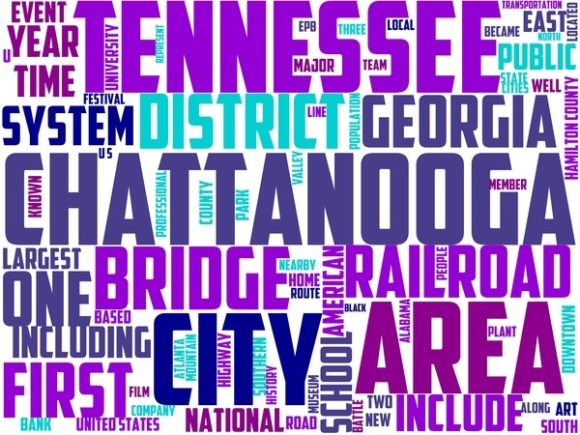
At its core, the Chattanooga Wordart Tshirt isn’t just a design—it’s a tactile, colorful language. This hand-drawn wordcloud stands apart from algorithmically generated alternatives by embracing organic line work, intentional color layering, and typographic diversity that feels human-made, not machine-optimized. Its visual warmth and layered texture make it especially effective when translated across physical and digital surfaces—from soft cotton tees to matte-finish notebooks or ceramic mugs. Unlike generic clipart or overused stock typography, this wordcloud carries subtle regional resonance (nodding to Chattanooga’s creative energy) while remaining universally adaptable for global audiences.
Why Hand-Drawn Wordclouds Resonate in Today’s Visual Landscape
In an era saturated with AI-generated visuals and uniform sans-serif compositions, hand-crafted wordclouds like the Chattanooga Wordart Tshirt offer something increasingly rare: perceptible intentionality. Each curve, stroke weight variation, and hue transition reflects deliberate artistic decision-making—not statistical frequency mapping alone. That distinction matters deeply when designing for emotional impact. Research in visual cognition shows people retain information longer—and form stronger associations—when typography carries expressive, non-uniform qualities. A hand-drawn “gratitude” nestled beside “resilience” and “wander” doesn’t just list concepts; it invites interpretation through spatial relationship and chromatic nuance.
This isn’t decorative filler. It’s semantic composition. The arrangement encourages viewers to pause, trace connections, and project personal meaning—even without reading every word. That makes it especially powerful in educational settings (e.g., vocabulary walls in elementary classrooms), wellness spaces (mindfulness posters in yoga studios), or community initiatives (local festival banners where “Chattanooga,” “harmony,” and “together” anchor the layout).
From Apparel to Everyday Objects: Practical Applications Across Mediums
The versatility of the Chattanooga Wordart Tshirt lies in how seamlessly it scales—not just in size, but in function. Below are real-world implementations observed across diverse sectors:
- Apparel & Textiles: Printed on organic cotton tees, linen tote bags, or woven scarves, the wordcloud gains tactile dimension. Its irregular edges soften at fabric seams, avoiding the “cut-out” look common with rigid vector graphics. Designers report higher engagement when using it on unisex crewnecks—the asymmetrical layout balances well across chest placements.
- Home Décor & Lifestyle Goods: Applied to ceramic mugs, the color palette holds up beautifully under sublimation printing. On throw pillows, the hand-drawn quality complements natural fibers like jute or wool-blend fabrics. One interior designer in Asheville used scaled-down versions as border motifs on custom wallpaper—repeating the cloud at 30% opacity created rhythmic depth without visual fatigue.
- Promotional & Institutional Materials: Universities integrate segments into orientation welcome kits—pulling out “curiosity,” “community,” and “discovery” for first-year student notebooks. Nonprofits use cropped sections as social media story highlights, pairing “action,” “hope,” and “change” with campaign hashtags. A Nashville music school printed miniature versions on guitar picks—each pick featuring three interlocking words relevant to musical growth.
- Educational Tools: Teachers print the full wordcloud on cardstock, then cut individual words for vocabulary sorting activities. Others laminate it as a classroom reference poster, inviting students to annotate connections (“How does ‘courage’ relate to ‘experiment’?”). In ESL contexts, educators highlight cognates across languages embedded within the cloud—e.g., “idea,” “ideal,” “idear” (Spanish)—supporting multilingual literacy.
- Digital & Print Publications: Magazine editors use the wordcloud as chapter dividers—rotating and recoloring sections to match thematic shifts. Ebook designers embed interactive versions where hovering over a word reveals a micro-definition or related quote. One independent publisher layered transparent PNGs over photography in a travel zine, letting landscape textures subtly show through the letterforms.
Design Flexibility Without Compromise
What sets this wordcloud apart is its native adaptability—not through endless file formats, but through intelligent structural design. The original artwork was built with layered transparency in mind: base shapes, mid-tone fills, and fine-line details exist on separate visual planes. That means designers can:
- Selectively mute background colors while preserving foreground linework for high-contrast signage.
- Isolate specific clusters (e.g., “creativity,” “process,” “play”) for targeted workshop handouts.
- Swap single hues to align with brand palettes—changing only the blue tones while keeping warm accents intact.
- Convert individual words into SVG paths for laser-cut wood signs or embroidery digitizing.
No plug-in, no complex software required. Because the hand-drawn nature avoids pixel-perfect symmetry, minor scaling or rotation enhances authenticity rather than breaking integrity. A 5% skew on a section containing “explore” and “discover” adds kinetic energy to a conference banner—something rigid geometric fonts rarely achieve without looking forced.
User-Centered Considerations for Responsible Implementation
While visually rich, the Chattanooga Wordart Tshirt demands thoughtful deployment. Accessibility should guide usage—not as an afterthought, but from selection onward. For instance:
- Color Contrast: When repurposing for digital interfaces, verify contrast ratios between text and background meet WCAG 2.1 AA standards. Avoid placing light-yellow words over pale peach backgrounds—even if aesthetically pleasing, readability suffers.
- Cognitive Load: In educational or public-facing contexts, avoid embedding more than 25–30 distinct words unless supporting context (icons, categories, or annotations) is provided. Overcrowding dilutes meaning and triggers visual avoidance.
- Cultural Context: While inherently inclusive in spirit, review word selections for unintended connotations. Terms like “balance” or “flow” carry varied interpretations across disciplines—yoga practitioners, engineers, and therapists may read them differently. Pairing words with brief contextual phrases (“balance → in workload and rest”) increases clarity.
- Production Realities: Screen printers note optimal results occur when the wordcloud is output at 300 DPI minimum and converted to vector outlines before separation. Embroiderers recommend simplifying fine inner strokes for stitch-count efficiency—preserving legibility without sacrificing character.
Emerging Trends Where This Wordcloud Adds Unique Value
Three evolving design movements amplify the relevance of hand-drawn wordclouds like the Chattanooga Wordart Tshirt:
- Slow Design Philosophy: As consumers reject mass-produced aesthetics, demand grows for objects bearing evidence of time, care, and craft. This wordcloud—its slight imperfections, uneven baselines, and pigment-like saturation—fits naturally into slow fashion collections, artisanal stationery lines, and locally made home goods.
- Hybrid Physical-Digital Experiences: Augmented reality apps now let users point phones at printed wordclouds to trigger audio reflections, animated definitions, or linked resources. A museum in Knoxville deployed this with a version focused on local ecology terms—“riparian,” “biodiversity,” “restoration”—transforming static wall graphics into interactive learning nodes.
- Personalized Meaning-Making: Rather than one-size-fits-all messaging, creators increasingly curate subsets of the full cloud. A therapist might select only words tied to emotional regulation for client journals; a startup founder might extract “iterate,” “listen,” and “adapt” for team onboarding decks. The original design supports fragmentation without losing coherence.
Integrating Into Creative Workflows—Without Overcomplicating
Adoption doesn’t require overhauling existing tools. Graphic designers using Adobe Creative Suite apply non-destructive adjustment layers to recolor sections. Canva users upload the PNG and use built-in transparency sliders to blend it over photos. Educators insert it directly into Google Slides, then use the “mask to shape” feature to crop it into speech bubbles or thought clouds. Even hobbyists using Cricut Design Space find success by uploading the high-res file and using the “simplify” tool selectively—keeping key words intact while smoothing less critical outlines.
What unifies these approaches is respect for the source material’s handmade origin. The most compelling uses don’t “fix” its irregularities—they leverage them. A slightly wobbly “belong” feels more honest beside “growth” than a perfectly kerned alternative. That authenticity resonates across age groups, professions, and cultural backgrounds—not because it’s flawless, but because it’s unmistakably human.
Looking Beyond the Surface
Ultimately, the Chattanooga Wordart Tshirt functions as both artifact and catalyst. It’s a finished product ready for immediate use—yet also an invitation to engage: to rearrange, reinterpret, and recontextualize. Its strength lies not in what it says outright, but in how it prompts others to articulate what matters to them. Whether stitched onto a child’s backpack, silkscreened onto a neighborhood café menu, or projected onto a library wall during National Poetry Month, it remains rooted in the same principle: language, when given space to breathe and color to sing, becomes infrastructure for connection.