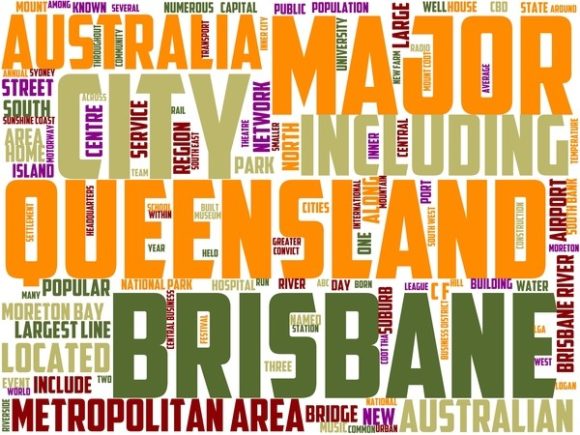
Brisbane Wordart Background: A Hand-Drawn Wordcloud for Authentic, Versatile Design
The Brisbane Wordart Background is a hand-drawn, colourful wordcloud — not generated by software algorithms, but crafted with intentional line work, organic spacing, and expressive typography. Unlike digital word clouds that scale words by frequency alone, this design treats language as visual texture: each word is carefully placed, sized, and angled to balance legibility, rhythm, and warmth. Its aesthetic leans into Australian creative sensibility — relaxed yet precise, playful without sacrificing cohesion — making it especially well-suited for lifestyle, wellness, education, and small-business branding contexts.
What Sets Brisbane Wordart Background Apart?
At its core, the distinction lies in human authorship. Every curve, shadow, and overlap reflects manual drafting decisions rather than automated output. That means no two instances feel generic or templated — even when reused across projects, the background retains character. It’s also built with layered colour harmony in mind: warm teals, muted corals, soft ochres, and earthy greys coexist without competing, allowing text overlays or printed elements (like embroidery or screen-printed motifs) to sit cleanly on top.
This isn’t just decoration — it’s a design foundation. The Brisbane Wordart Background functions equally well as a subtle textile repeat, a bold poster backdrop, or a textured layer beneath a logo lockup. Its flexibility comes from intentional negative space distribution and consistent baseline alignment, which supports readability at multiple scales — from business card-sized accents to 36-inch wall posters.
How It Compares to Other Word-Based Visual Resources
When evaluating word-based graphics, designers often weigh three broad categories: algorithmic word clouds, typographic illustrations, and hand-lettered assets. Each serves different needs — and the Brisbane Wordart Background occupies a deliberate middle ground.
- Algorithmic word clouds (e.g., TagCrowd or WordItOut outputs) prioritise data representation over aesthetics. They’re useful for quick visual summaries but rarely hold up in print or branding applications where tone and craft matter. Their rigid hierarchy — largest word = most frequent — can clash with narrative intent.
- Typographic illustrations tend toward high contrast, tight kerning, and editorial polish. They excel in magazine features or digital banners but often lack the tactile softness needed for apparel, ceramics, or woven goods.
- Hand-lettered assets offer authenticity but vary widely in scalability and consistency. Some are single-line sketches unsuitable for dense layouts; others lack colour integration or repeat capability.
The Brisbane Wordart Background avoids these extremes. It’s drawn with vector precision (ensuring crisp scaling), includes pre-balanced colour variants (light/dark mode compatible), and maintains enough visual breathing room to accommodate additional graphic elements — like icons, photos, or handwritten notes — without overcrowding.
Practical Use Cases and Real-World Fit
Because it’s designed for reuse across physical and digital media, the Brisbane Wordart Background shines where versatility matters more than singular impact. Consider these realistic examples:
- A boutique yoga studio prints it onto cotton tote bags — the hand-drawn quality reinforces their emphasis on mindful craftsmanship, while the open layout keeps the brand name legible above the pattern.
- An indie publisher uses it as endpaper in a poetry chapbook, then reuses the same file for social media banners and email headers — maintaining visual continuity without licensing complications.
- A school fundraiser team applies it to sticker sheets, notebook covers, and ceramic mug decals. The consistent palette simplifies production coordination across vendors, and the non-photographic nature avoids copyright concerns common with stock imagery.
It also works well in mixed-media contexts. Artists have embedded fragments of the wordcloud into collaged greeting cards, traced sections onto fabric using iron-on transfers, or laser-cut outlines into wooden coasters. Its construction allows for selective masking, cropping, or colour replacement without losing integrity — something many algorithmically generated alternatives don’t support reliably.
Limitations and When to Look Elsewhere
No design resource fits every scenario — and understanding where the Brisbane Wordart Background falls short helps avoid misapplication. It’s intentionally non-thematic: there’s no built-in subject focus (e.g., “education”, “fitness”, or “eco”) beyond broadly positive, inclusive vocabulary. If your project requires tightly curated terminology — say, medical terminology for a clinic brochure or industry jargon for a tech conference — you’ll likely need custom lettering or a purpose-built word list.
Similarly, while the background scales well, it’s not inherently modular. You can’t easily swap individual words without disrupting the composition — unlike editable template-based word clouds where each term lives on its own layer. For campaigns requiring multilingual versions or seasonal updates (e.g., swapping “summer” for “winter”), some manual redrawing may be necessary.
And though it’s optimised for CMYK and RGB workflows, extremely fine details (like delicate cross-hatching or ultra-thin strokes) may require slight adjustment for low-resolution printing methods — such as basic inkjet transfers or budget DTG apparel printing. Testing a physical proof first remains advisable for critical product launches.
Decision Factors: Is This the Right Choice for Your Project?
Ask yourself these questions before selecting the Brisbane Wordart Background:
- Do you value handmade authenticity over algorithmic efficiency? If your audience responds to warmth, imperfection, and human touch — especially in wellness, education, or community-driven spaces — this background aligns strongly.
- Are you producing across multiple formats? From apparel to packaging to digital ads, its balanced density and colour flexibility reduce the need for separate asset versions.
- Is your message broad rather than niche? It works best when supporting ideas like “growth”, “connection”, “creativity”, or “balance” — not highly technical or domain-specific concepts.
- Do you need full editability at the word level? If yes, consider pairing it with a lightweight typographic overlay instead of relying solely on the background’s built-in vocabulary.
For teams managing limited design bandwidth, the Brisbane Wordart Background offers a rare combination: professional-grade execution with minimal setup time. It doesn’t replace thoughtful layout or strategic copywriting — but it does remove one layer of visual decision fatigue, letting creators focus energy where it matters most: messaging, audience resonance, and material execution.
Final Thoughts on Integration and Longevity
Unlike trend-dependent graphics that age quickly, the Brisbane Wordart Background draws from enduring principles: hand-drawn charm, accessible colour theory, and compositional restraint. That gives it staying power — a poster made today will still feel intentional five years from now, not dated by 2024’s gradient trends or font fads.
Its strength isn’t in dominating attention, but in supporting it — quietly reinforcing tone while leaving room for people, products, and stories to take centre stage. Whether you’re launching a new line of artisan candles, designing a conference program, or updating classroom materials, it serves as both anchor and amplifier: grounded enough to trust, expressive enough to inspire.